On short nails, a French manicure lives or dies by one decision: how wide the tip is. A thin line leaves most of the base visible and makes the nail look longer; a wide band shortens it. Once you've chosen the width, the color and the shape of the line do the rest. Here are 10 French tip designs that work on short nails, starting with that width comparison.
Thin edge or wide edge? Compare first

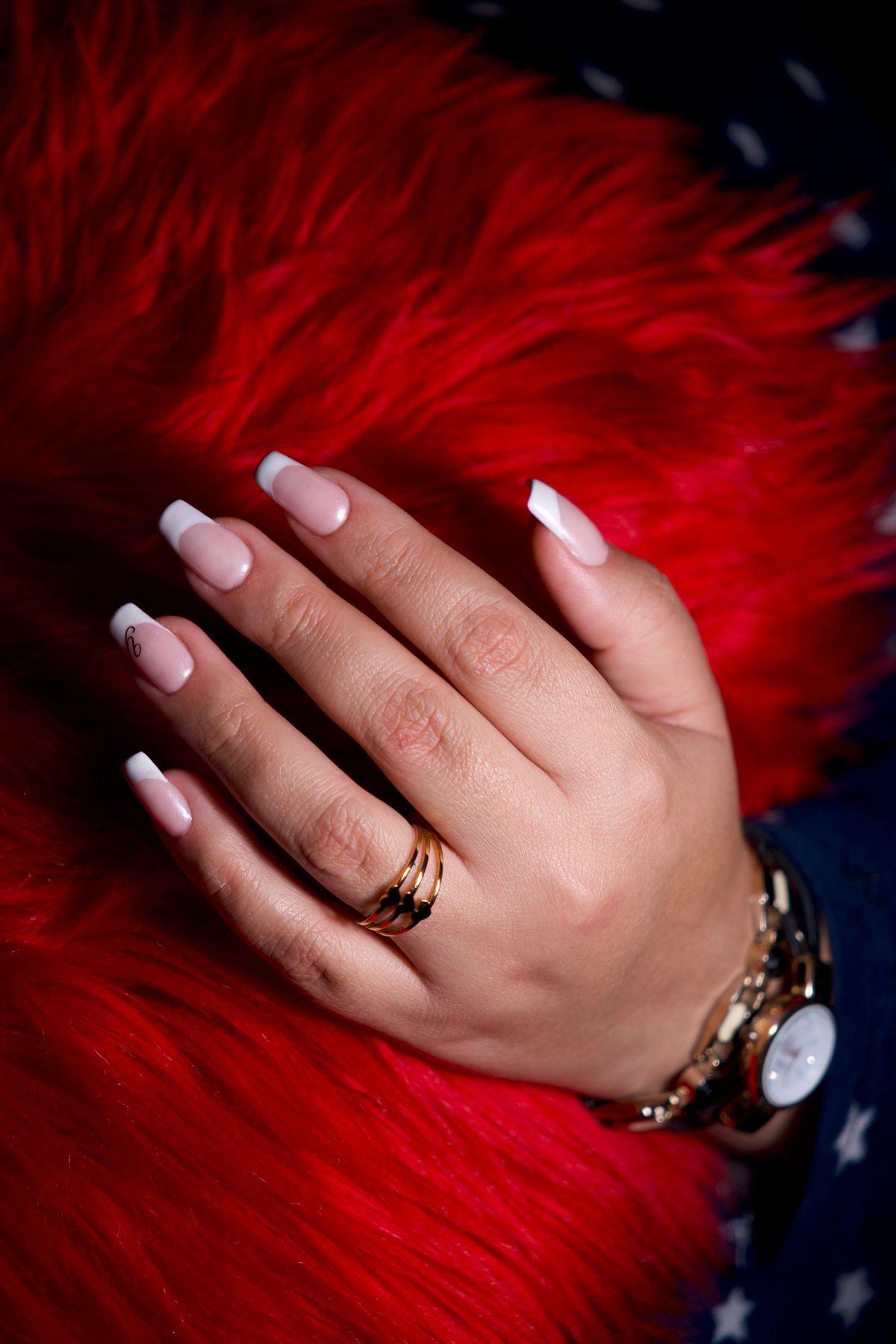
The rule of thumb at the manicure table: on short nails, keep the tip no wider than the free edge you can see when you look at the back of your hand. Anything wider and the pink part shrinks, so the nail reads shorter.
10 French tip designs for short nails
1. Micro French
A very thin line right at the tip, sometimes only a millimeter wide. It's the best starting point for short nails, as the first photo above shows: the base does most of the work and the line just frames it.
2. Classic white on a milky base
Swap the sheer pink for a milky nude and the whole look gets softer and hides any discoloration on the nail. Pick the base to match your skin; we explain how in our guide to milky base colours.
3. Colored tips

Pastel blue, olive, red, black, or a different color on each finger from one palette. A colored tip is more forgiving than white, too: small wobbles in the line show less.
4. Glitter tips

A great choice if your freehand lines aren't steady yet: dab glitter polish at the tip with a small brush or sponge and let it thin out toward the middle.
5. Angled (diagonal) tips
The tip runs diagonally, wider on one side and narrower on the other, like the far-right finger in the wide-edge photo above. On short nails, angle it so the narrow end sits toward the thumb; the line then leads the eye along the nail and makes it look longer.
6. Double line
Under the classic tip, add a second thin line in a contrasting color, like gold under white or black under nude. Leave a hair's breadth of base between the two lines so they don't merge.
7. French with a tiny accent
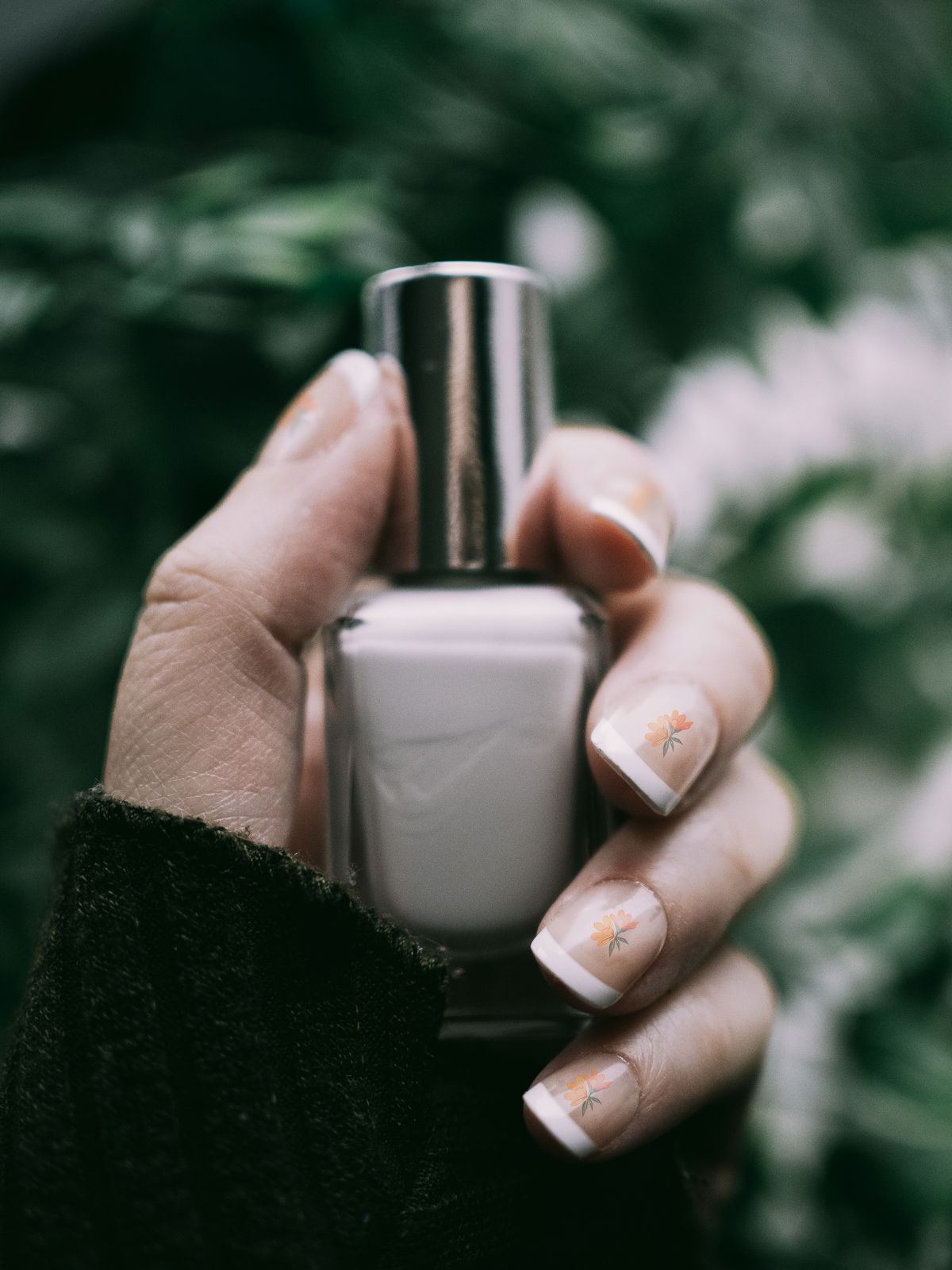
A dot, a small flower or a tiny star near the cuticle balances the line at the tip. Keep it to one or two nails.
8. Chrome tips
Tips rubbed with silver or gold chrome powder look like metal and catch the light. Apply the powder only on the tip: paint the tip in color, cure a no-wipe top just there, then rub in the chrome. The full method is in our guide to the chrome finish.
9. Ombre French (baby boomer)
A soft fade from nude at the cuticle to white at the tip, with no line at all. On short nails, start the fade around the middle of the nail so the white doesn't take over.
10. Reverse French
A half-moon of color at the cuticle instead of a tip at the end. It's a smart choice for short nails that grow out quickly, because regrowth shows less when the color already starts at the base.
How to do micro French tips on short square nails
Square and squoval nails have two corners, and that's where a micro French usually goes wrong: the line either thickens at the corners or misses them.
- Start at one corner. Place the brush tip right on the corner and pull it toward the center of the nail, following the free edge.
- Repeat from the other corner, meeting in the middle. Two short strokes are easier to control than one long one.
- Look at the nail head-on. If one corner looks heavier, take a little off with an angled brush dipped in cleanser or remover.
- Check the width against the photos above: on short square nails, the thinner version leaves far more base visible, which is what makes the nail look longer.
Other ways to get a clean line
- Stick-on guides. Place the curved stickers just below the tip line, paint, and peel them off before curing.
- The stamper method. Put the color on a soft silicone stamper and press the tip of your nail into it at an angle. Expect a few tries before you get a feel for the angle.
- A fine liner brush. The most control, and the most practice needed.
Frequently asked questions
Does a French manicure work on short nails?
Yes. Micro French, colored tips and glitter tips work best. A wide classic tip makes short nails look even shorter.
How wide should a French tip be on short nails?
No wider than the free edge you see from the back of your hand, often just one or two millimeters.
What nail shape is best for a French manicure?
Oval and squoval give the most elegant line on short nails. A sharp square is harder to paint at the corners.
Comments (0)
Add a comment